Demand The 5
Core Steps
of extensive research but is still a pain point for
many organizations
Gloria Jean’s Coffees
January 29, 2024
Overcoming Operational Challenges to Improve Profitability Gloria Jean’s Coffees (GJC), founded by Gloria Jean Kvetko in 1979 in Chicago, USA, expanded its business in Australia with the opening of its first coffee shop in Sydney in 1996. C Challenge The client faced several challenges such as high operational costs affecting…
admin-knowhow

Gismod Shop
Strategies for Boosting Online Sales and Reaching Target Audiences through Effective Digital and Social Media Planning Our client is a leading FMCG distributor in the market, operating in both B2B and B2C channels through their e-commerce platform. C Challenge The client faced multiple challenges such as unstructured product categories on…
admin-knowhow

Gismod Commerce
Improving Supply Chain Efficiency for an FMCG Distributor Our client is a prominent FMCG distributor with a wide range of product offerings in the food and beverages, household and personal care, and liquor and spirits categories. With rapid expansion in the market, the client faced several significant challenges, including low…
admin-knowhow

Domino’s Pizza
July 6, 2017
Driving Operational Efficiency and Boosting Profitability: A Successful Consultancy Project in the Food Industry Founded in 1960, Domino’s Pizza, Inc. (trading as Domino’s) is a multinational pizza restaurant chain based in the United States. The client is a franchise holder of Domino’s Pizza in the Africa market, with an impressive…
admin-knowhow

Sector We Serve
-
Logistics & Transportation
0 course -
Road & Highway Construction
0 course -
Distribution & Warehousing
10 courses -
Franchising & Restaurants
11 courses -
Automotive & Spare-parts
8 courses -
Manufacturing
9 courses -
Retail & E-Commerce
7 courses -
Fashion & Apparel
15 courses -
Hospitality, Leisure & Travel
8 courses -
Pharma & Healthcare
13 courses
How We Challenge

Browse E-Knowhow
Latest Articles
Supply Chain Leadership Driving Industry 4.0 & Resilience During Crisis
Keywords: Supply chain leadership; Industry 4.0; Resilience; Crisis; Lean Whilst the COVID-19 pandemic spreads across the world, it is vital for organisations to ensure a reliable supply of products and services. Lockdown of cities and manufacturing plants have significantly impacted many industries’ supply chains. This challenge has contributed to the…
Supply Chain Leadership Driving Industry 4.0 & Resilience During Crisis

Five Pillars to Save Cost in Today’s Supply Chain (Part 2)
Keywords: Cost management; Supply chain; Automation; Training In the first part of this article, I spoke about the 3 pillars of setting goals (but have a plan), centralise, and collaborate to minimise cost in supply chain from different dimensions. While setting gaols with concrete plan was representing a roadmap of…
Five Pillars to Save Cost in Today’s Supply Chain (Part 2)

Bridging the Distributor into a Collaborative Demand and Supply Planning Process
If you are a newbie to managing a WordPress website, then congratulations!
Bridging the Distributor into a Collaborative Demand and Supply Planning Process
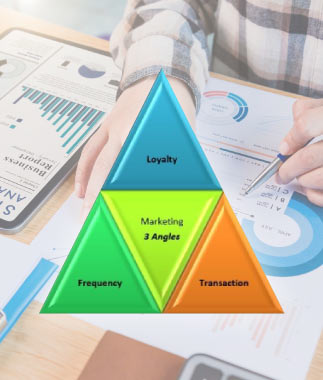
Marketing Triangles
If you are a newbie to managing a WordPress website, then congratulations!
Marketing Triangles
5 Whys Root Cause Analysis
Background
Stubborn or recurrent problems often causes deeper issues.
“Quick fixes” may seem convenient, but they do not provide permanent solutions.
5 Whys technique developed by Sakichi Toyoda, the Japanese industrialist, inventor and founder of Toyota Industries, in the 1930s. 5 Whys became popular in the 1970s, and Toyota still uses it to solve problems today.
Toyota has a “go and see” philosophy. This means that its decision making is based on an in-depth understanding of what is actually happening on the shop floor, rather than on what someone in a boardroom thinks might be happening.
The 5 Whys technique is most effective when the answers come from people who have hands-on experience of the process or problem in question.
1) First step of 5 Whys analysis is to define
Completing the 5 Whys Root-Cause Analysis
- Product/Supplier
- Department
- Completed by, and
- Date
details that are subject to apply the analysis
2) Second step is to clearly define the Problem, which should be specific, clear and concise.
When defining the problem, gather together people who are familiar with the specifics of the problem, and with the process that you’re trying to fix.
Include someone to act as a facilitator, who can keep the team focused on identifying effective counter-measures.
If you can, observe the problem in action. Discuss it with your team and write a brief, clear problem statement that you all agree on.
3) Third part focuses on the cause of the problem with starting to ask: “Why is this a problem?”
The goal here to explore the impact of existence of relevant issue that appears to be problem.
Following this, it is required to ask:
“Why is it happening?”
- Primary Cause
- Contributing Problem
- Other Contributing Problem
Following this process, four more times “Why is that?” is required to ask from three different dimension as well, where the last question will enable to explore the root-cause of the problem.
Ask your team why the problem is occurring. (For example, “Why isn’t Team A meeting its response time targets?”)
Asking “Why?” sounds simple, but answering it requires serious thought. Search for answers that are grounded in fact: they must be accounts of things that have actually happened, not guesses at what might have happened.
This prevents 5 Whys from becoming just a process of deductive reasoning, which can generate a large number of possible causes and, sometimes, create more confusion as you chase down hypothetical problems.
Corrective Action To Take
4) The final step of 5 Whys analysis is to set corrective actions based on root-causes of problems explored at third step from three different dimensions, addressing
- Primary Cause
- Contributing Problem
- Other Contributing Problem
While corrective actions are taken, it is essential to describe actions that are specific, measurable, attainable, realistic, and time-based (SMART).
For each corrective action, you should define
- Responsible party, who will lead the corrective action?
- Date action to begin, when will the corrective action start?
- Date to complete, when will the corrective action end?
All rights reserved by KnowHow Consultancy LTD.